
Security information and event management (SIEM) is an approach to security management that combines security information management (SIM) and security event management (SEM) functions into one security management system.
The underlying principles of every SIEM system are to aggregate relevant data from multiple sources, identify deviations from the norm and take appropriate action. For example, when a potential issue is detected, a SIEM system might log additional information, generate an alert and instruct other security controls to stop an activity’s progress.
How Does SIEM Work?
SIEM tools gather event and log data created by host systems throughout a company’s infrastructure and bring that data together on a centralized platform. Host systems include applications, security devices, antivirus filters and firewalls. SIEM tools identify and sort the data into categories such as successful and failed logins, malware activity and other likely malicious activity.
The SIEM software generates security alerts when it identifies potential security issues. Using a set of predefined rules, organizations can set these alerts as a low or high priority. For instance, a user account that generates 25 failed login attempts in 25 minutes could be flagged as suspicious but still be set at a lower priority because the login attempts were probably made by a user who had forgotten their login information.
However, a user account that generates 130 failed login attempts in five minutes would be flagged as a high-priority event because it’s most likely a brute-force attack in progress.
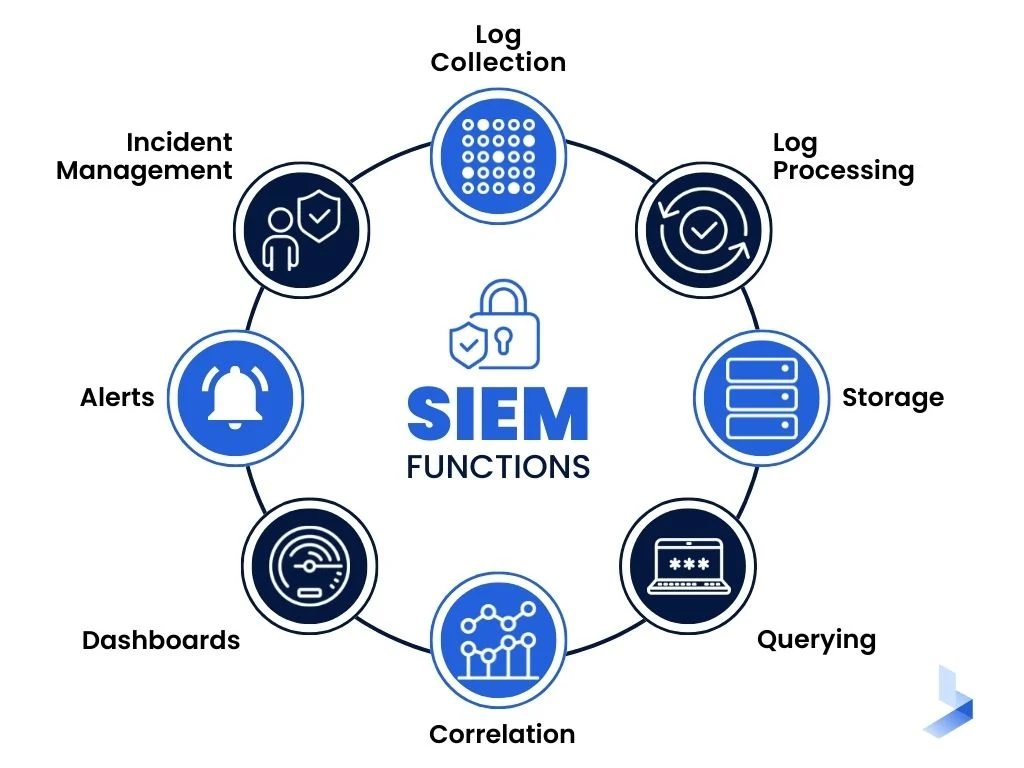
SIEM makes it easier for enterprises to manage security by filtering massive amounts of security data and prioritizing the security alerts the software generates.
SIEM software enables organizations to detect incidents that may otherwise go undetected. The software analyzes the log entries to identify signs of malicious activity. In addition, since the system gathers events from different sources across the network, it can re-create the timeline of an attack, enabling an organization to determine the nature of the attack and its effect on the business.
A SIEM system can also help an organization meet compliance requirements by automatically generating reports that include all the logged security events among these sources. Without SIEM software, the company would have to gather log data and compile the reports manually.
Original Source here
Get Started with Secunet
Looking for help? Get in touch with us